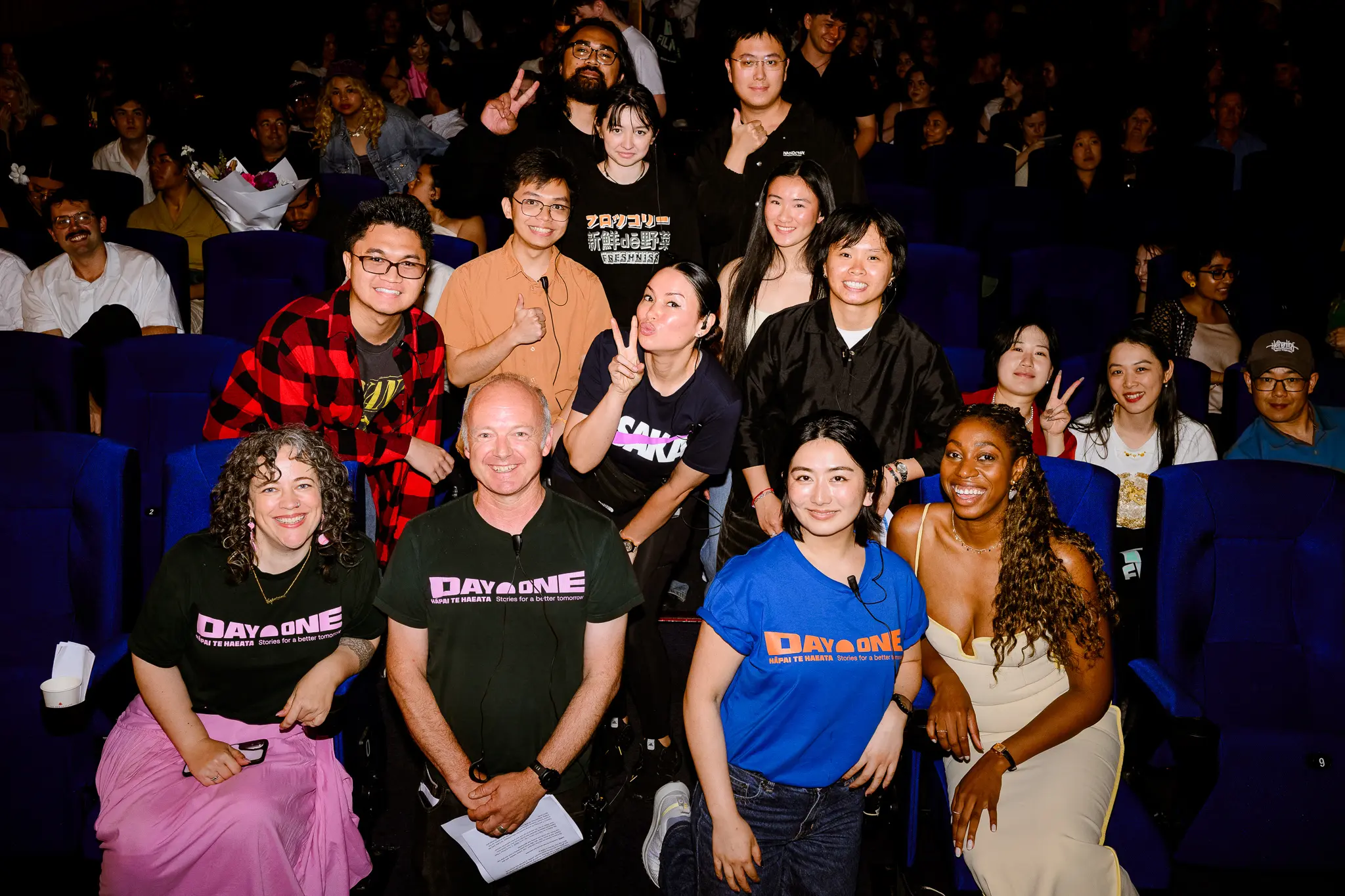
Audience Unfiltered: Reviews are in for the Day One New Filmmaker Awards!
On 19 November, we asked for our amazing wider community if they would be keen to review films for us at the Day One New Filmmaker Awards 2025. The response was overwhelming. Their reviews are now in!
Meet our reviewers and see what they had to say below.
Zhenghan Chen - @tanlynshengx
On Facelump:
"I am amazed by how a teenage film team can make such an eerie film, by using the stair montage to create deep, hollow fears, as well as the weird costumes to present body horror or appearance anxiety. Even though the cinematography and sound volume adjustment still have room for improvement. For cinematography, strive for stability and try to connect two scenes using match movement, sound bridges, etc. For sound volume, practice more and aim to find the optimal volume for the video (note that there is one part where the volume suddenly rises)."
On Top 50 Jazz Classics:
"Lovely editing and pacing! It's impressive to see that they are trying to control the pacing of their storytelling, leaving space for the audience to develop and consume emotions. For instance, the entering scene to the record shop, which can be even longer and pans with the protagonist's movement, to slow down the pacing. Another crucial excellence is, that they use music as the synchronous sound, motivated by a speaker, which is also an important prop in the film."
On mhm:
"Very professional, very experienced. Starts with a nice hook by relating mhm, as a colloquial interjection, to mental health matters. It is inspiring to realise that every seemingly unimportant moment may be related to mental health, and it draws the public's attention in the same way. Vulnerability is humanity, today's proverb."
On Visa:
"Fantastic and stunning film noir. Presenting a political metaphor of geopolitics, refugees, and war. It is harsh to reveal the wound; it is even crueller to present individual pain to draw public attention to an international issue. The interviewer wearing a human skin mask is a master of costume design, evoking the image of cannibals or corpses. Using this visual setting to depict the cold-bloodedness and cruelty of certain countries in international issues, which is also the topic the film seeks to explore. May the world be at peace."
On Step into Seduction:
"Very good documentary! Really like the cinematography and colour usage. The techniques above create an erotic yet psychedelic visual effect, but the film is trying to explore a more serious issue of women's physical identity and privacy. They are seeking a safe space, where everyone, every gender, should have the freedom to express themselves, and without being subjected to or marginalised by others."
Emma Hayes - @e.mm.a.hayes
On Plastic Fever:
"Plastic Fever is a short animated film about the reality of Plastic pollution on our planet. This short film told such a powerful message within such a short space of time using a clever narrative. The narrative followed a factory of human body parts and the comparison of humans and plastic. The writer showed the effects of the world if humans were as disposable as plastic is. If we were, we also wouldn't be able to be repurposed and planet earth would end up with a massive pile of dead Bodies that wouldn't be able to decompose. This is exactly what plastic does to our planet. I loved this comparison and I thought the animation made this film that much more powerful. It's so important that these stories are being told and in such a creative way. Keep telling them!"
On Poi:
"Poi was an informative short film about the use of Poi and its history within Aotearoa. This short film was succinct, had great clear instructions and I came away from it learning more about Poi which was the purpose of the film. The Writer gave us clear instructions about the rhythm and correct movements to successfully use a poi. They also gave us facts about historical purposes of Poi which was something I never knew. Overall I really enjoyed this short film as I came away from it wanting to try it myself and I also think it's important for New Zealanders to know about the history of the land we walk upon. This film had a great clear message and I think the writer succeeded with their purpose of this film. The only constructive feedback I would have is that I would love to see even more about Poi. Maybe you could create a part 2 with a different technique of Poi."
On Get Out:
"Get out was a short film about getting out into nature and spending less time on our devices. This film had such a great message and I think it's super important that our tamariki are talking about this topic because younger generations are often accused of spending too much time on their devices. If the younger generation are aware of the impacts that their phone usage can have on them then maybe they will spend less time on their phones and more time out in nature, which is what this short film highlighted so well. I thought it was also super creative how the writer/director shot this short film on their phone. It shows a great message that instead of consuming content and scrolling all day online, you can go out and create your own films and they can win you awards which is so wicked. This writer should be super proud of their achievements and the message they are putting out into the world because it's a good one!"
On Fading Spotlight:
"Fading Spotlight had a strong narrative about Funding the Arts in School and how vital and important it is to tamariki's learning. This film touched on the current topic in politics about the government cutting the funding for the arts programs and putting it into other subjects that they think are more important. The writer highlighted strong points from teachers and students from Waitakere collage who shared their experiences on why the arts are important and how it can have negative repercussions with the lack of funding. This film was precise with information, I learnt something new and I came away wanting to do something about it. This writer achieved everything they set out to do in creating this film by having a great structure and delivering information in a creative way. As someone who went through the arts in high school I related a lot to this short film. If I hadn't been given the experiences that I had within the arts in high school, I would be a completely different person. This writer should continue to tell these stories because unfortunately they are usually the ones that are kept behind closed doors. Loved this film! Keep making them."
On Face Lump:
"Face Lump was about a female protagonist who was fighting demons of self insecurity and the pressures of society beauty standards. The writer/director created an incredible horror film that depicted the horrors we feel from society. As a fellow wahine I got a strong message of Plastic Surgery and its effects on our Tamariki. In this Short film the female protagonist was running away from other women who had used this tool to achieve a nose job. They were taunting her and peer pressuring her into getting one too. This is such a strong message and the writer/director delivered it so well with the use of the horror genre. It truly frightened me to see women doing things like that to their body and unfortunately this has become such a beauty standard. Overall this was a great film with such a great message behind it and it's so powerful that our tamariki are telling these stories.
Sydney Hughes - @sydneyrosamia
On Lost and Found:
"What starts as a hunt for an Apple Pencil quickly becomes a funny, painfully real look at life after breakup in Lost and Found. The film captures that weird in-between phase perfectly - when your routine is off, your heart’s still bruised and the smallest things suddenly feel massive. The humour throughout is that same kind of natural, unforced realness. Watching the protagonist unravel over a missing Apple Pencil is funny but painfully relatable. It’s never really about the pencil - it’s about everything underneath it."
On Top 50 Jazz Classics:
"Top 50 Jazz Classics is a quiet, beautifully observed short about grief and the small shifts that help us keep moving. It follows a woman carrying the weight of her mother’s passing, moving through life gently, almost cautiously. What the film captures so well is how healing doesn’t come with big moments - it arrives in sparks. A sound, a feeling, a pull toward something unexpected. For her, that spark is jazz. The music becomes both a comfort and a catalyst, guiding her from the stillness of grief toward a world that begins to feel open again."
On Echoes in the Wind:
"Echoes in the Wind is a poetic, quietly moving short that traces one man’s journey through grief and remembrance. After the loss of his girlfriend, he carries the travel journal she left behind, a collection of places she dreamed of seeing. The film follows him as he steps into those spaces, not to escape his pain, but to feel connected to her again.
Nature is the film’s heartbeat. Wind, light, and open landscapes mirror the emotional movement happening inside him. The flashbacks are soft and fluid, almost like memories drifting through the air rather than being forced onto the story. It creates a grounding sense of being held by the earth, even in moments of loss.
There’s a wholesome tenderness to the film’s rhythm: each location becomes a quiet conversation between past and present. And the recurring image of lighting a match becomes a gentle symbol, not of finality, but of presence. A suggestion that she’s still with him, in spirit, in warmth, in the smallest flicker of light."
On VISA:
"VISA is a confronting, tightly crafted short film that cuts straight to the heart of what it means to seek safety in a world that treats humanity like paperwork. Through a series of tense, uncomfortable exchanges, the film exposes the contradictions baked into our systems - how governments and institutions profit from migrants, yet fail to support them when it matters most.
The storytelling is unflinching. There’s a chilling moment when the protagonist is hit with the phrase “people like you,” a line loaded with false assumptions and quiet violence. It highlights how prejudice often hides behind polite language, and how accusations can be thrown without evidence simply because the power imbalance allows it.
The film also nods to wider horrors - genocide, displacement, the harsh realities that push people to flee in the first place. Small details like children’s teddies and personal belongings add a heartbreaking layer, reminding us that asylum isn’t abstract; it’s lived, felt, and carried.
Perhaps Visa’s strongest point is its honesty. It isn’t afraid to call out the hypocrisy: societies that rely on immigrants to function, yet label them a “threat” when they ask for help. The film is a mirror held up to systems that benefit from people’s labour but reject their humanity.
Powerful, urgent, and deeply resonant, Visa forces us to confront truths many prefer to ignore."
On Step into Seduction:
"Step Into Seduction is a bold and empowering short documentary that dives into the world of burlesque and heels dancing with both honesty and heart. It unpacks the stigma surrounding exotic dance, revealing the art form’s depth, discipline, and unapologetic femininity.
What Step Into Seduction does beautifully is peel back the layers behind each performance. It treats burlesque not as something to sensationalise, but as a craft built on storytelling, emotion, and ownership of one’s body. The dancers speak to the tension of being judged or dismissed, yet the film shows how embracing sexuality on their own terms becomes a form of liberation."
Promise Akindeju - @promiseakindeju
On Lost and Found:
Lost and Found is a tender slice-of-life portrait that lingers in the quiet spaces between the big, dramatic moments of heartbreak. On the surface, the story follows a young woman searching for her Apple Pencil, but beneath that simple premise sits something far more delicate: the way a tiny inconvenience can unspool the threads of a much deeper hurt. The film captures that familiar emotional ambush – when something small cracks open everything you’ve been trying to neatly hold together.
From the beginning, the pacing feels intentional and intuitive. I found myself drawn in by the film’s ability to hold attention through stillness: the tapping of her fingers, the shuffle of her feet, the quiet rhythm of someone lost in their own thoughts. The cross-cutting between her face and those small fidgeting gestures was especially striking. Even though the film isn’t fast-paced or high-stakes, there were moments where I genuinely felt myself holding my breath with her– sitting in that intimate tension of “do I text my ex or not?” It’s subtle, but effective.
If anything, the only moment where that intimacy slightly loosened was the extended sequence of her sorting through her wardrobe. I appreciated its intention – it felt personal and lived-in – but trimming maybe twenty seconds or so would keep that emotional thread taut without losing the closeness. In saying that, this was not a big deal at all.
The cinematography is beautifully handled. The handheld movement gives the sense of being quietly present in the room with her, like a trusted friend witnessing a private unraveling without intruding. Nothing felt jarring in the edit, which is impressive given how frequently the angles shift. The choice of aspect ratio and filmic texture was also inspired – it enhances the feeling of something homemade, heartfelt, almost diaristic. The colour grade strikes a lovely balance between polished and natural, never tipping into something too stylised for the story it carries.
The lead performance is genuinely wonderful. Her emotional world is communicated with such clarity and softness that even small expressions feel meaningful. Sound and music choices also support the tone well – gentle, unobtrusive, and attuned to the film’s emotional pulse.
Knowing the creator drew from the aftermath of their own breakup adds even more resonance. You can feel that honesty in the film; it’s not trying to dramatise heartbreak, only to show the quiet, mundane moments where it leaks through.
Though I haven’t experienced this exact feeling after a breakup myself, the theme of everything unravelling at the slightest inconvenience is deeply relatable. It reminded me of times where a day’s worth of frustrations culminated in something tiny – like discovering my favourite muffin flavour sold out at the supermarket – and suddenly the dam burst.
Overall, Lost and Found is a tender, thoughtful short that I’d wholeheartedly recommend, especially to fans of slice-of-life storytelling or anyone who enjoys exploring emotional depth through everyday moments. It’s sweet, honest, and quietly affecting."
On Sunphase:
Sunphase is a vivid, joyful exploration of movement. Instead of guiding us through a traditional storyline, it lets the dancing take centre stage, unfolding like a visual poem. The backdrop, the costuming, the textures of the settings and music all work together to showcase the beauty of contemporary dance in a way that feels fresh and energising.
Going into it, I genuinely wasn’t sure how I would respond. I’ve never really watched a dance film before, and because I’m so used to fast, bite-sized dance clips online, I worried I would enjoy it briefly and then drift off. But I was wrong. So wrong. The film held me the whole way through. The level of skill the dancers brought was incredible. Every movement felt intentional. Huge kudos to the dancers, director, producer, cinematographer and everyone involved! It really felt like a team working in perfect sync.
The costumes were one of the first things I noticed. They felt modern, expressive and really fitting for the choreography. The editing also stood out. The cross-cutting flowed beautifully with the music, making each section feel like its own little world while still belonging to one cohesive piece. The song choice was strong, and I loved how the dancers shifted their movement quality to match each vibe change in the soundtrack.
There also seemed to be a gentle narrative running underneath. Starting in the open field and moving into the more crowded urban space felt like a journey from solitude to community, or maybe from inner expression to sharing that expression with others. It was subtle, but meaningful.
The only aspect that didn’t quite work for me was the colour grading in the city scenes. The field looked stunning, but the urban tones felt a little less notable.
Overall, this film definitely resonated. I’ve always loved dance, and seeing people create something so playful and experimental made me want to get back into it myself. It also opened my eyes to dance films as a genre I’ve barely touched.
I’d absolutely recommend watching Sunphase, especially for anyone who loves movement, music and creative expression."
On Top 50 Jazz Classics:
"Top 50 Jazz Classics is a gentle and affecting story about a daughter trying to find her way back to her mother after a difficult period. Music becomes the bridge between them, a way of reaching across grief, silence and all the spaces that form when life gets heavy. Through the search for old records and familiar sounds, she also starts finding her way back to herself, remembering what it feels like to be brave, open and free again. It is a simple premise, but beautifully carried.
What struck me first was how grounded the film feels. The close attention to everyday details, like the tap dripping into the sink, anchors the story in a quiet sadness that feels instantly recognisable. These are the small things you notice when you feel stuck inside your own thoughts. The film captures that emotional stillness so well. It has a softness to it, but also a weight. It understands the quiet ache of trying to become a person again after a loss.
The cinematography is genuinely impressive. Every shot feels carefully considered, yet nothing feels overdesigned. The transitions, the framing, the subtle movements of the camera, all blend together with a calm confidence. The sound design is one of the strongest elements. I felt fully immersed in the world from the beginning. The song choices are perfect for the story being told. They feel nostalgic, tender and purposeful (also jazz is just very beautiful!) I also loved how the film lets silence speak. So much is implied rather than said, and it works beautifully.
The acting in the opening scenes is lovely and immediately emotive. The only moment that felt slightly less natural to me was the first interaction between the record store worker and the main character. It still captured the intended awkwardness, but could have flowed a touch more smoothly. After that, though, I felt every beat landed well.
I enjoyed the repetition of the foot walking to the beat, and the girl getting happier and happier as she listened to more and more music. Powerful. One of my favourite moments is the closing shot. The shift in focus from the daughter dancing to the framed photo of her mother is a smart and moving final note. It ties everything together quietly, without overstating anything. And the title is fantastic. It feels playful at first, but once you finish the film, it becomes the only possible title it could have had.
While I do not know the filmmaker’s personal experience, the story feels rooted in something real. It carries the emotional texture of someone who has known loss or at least deeply understands that universal feeling of losing yourself for a while. The film captures the slow, fragile effort of rebuilding, of learning how to step forward again. It is handled with honesty and care.
This film resonated with me in its portrayal of trying to reconnect with yourself after drifting away from your own sense of who you are. It is gentle, hopeful and very human.
I would absolutely recommend Top 50 Jazz Classics. It is beautifully crafted and made with clear intention. The talent behind it is undeniable, and it makes me excited for the next generation of storytellers."
On FRANKENAi:
"FRANKENAi is a sharp, funny and thoughtful multimedia documentary that breaks down our collective fears about artificial intelligence by tracing them back through the stories we have told for centuries. It opens with a comedic ease, but underneath that humour is a genuinely well-researched thread that connects modern anxieties to classic works like Frankenstein. The film makes it clear that these worries are not new at all. They have lived in our storytelling since the very beginning, which makes the whole topic feel a little less overwhelming and a lot more human.
The storytelling is one of the strongest elements. It blends an-almost documentary style, with comedy, a touch of slice of life and even stop motion, yet it never feels chaotic (at least not in a negative way!) Instead, it feels playful and purposeful. I loved how the filmmaker drew parallels between themes in classic literature and the way AI is talked about today. It gives audiences that satisfying “aha” moment where everything clicks into place.
The visual style is also excellent. The cooler-toned colour grading suits the sci-fi undertones of the topic, and the use of cool greens in particular gives the film a slightly uncanny, tech-infused mood without ever feeling too heavy. The multimedia choices shine throughout. The fisheye lens in the small room is a standout, creating that trapped, watched feeling that mirrors current concerns about AI and surveillance. The puppets, stop motion moments and the thoughtful lighting all add texture and charm.
The intentionally cartoon-like electricity effects made me smile. They feel knowingly gimmicky in the best way, leaning into the film’s playful side and really supporting the whole multi-format approach.
The only technical adjustment that could strengthen the piece would be more consistent audio levels, although this was minor and did not detract from the viewing experience.
The comedic timing is genuinely impressive. Managing to land jokes in under five minutes is incredibly difficult, yet the film does it with confidence.
This film resonated with me as someone who loves going down rabbit holes and figuring out why things are the way they are. It captures that feeling of curiosity turning into a mini hyperfixation.
I would definitely recommend FRANKENAi. It offers a clever mix of humour, history and reflection, and manages to be both educational and entertaining in a very short runtime."
On The Unsent Letter:
"The Unsent Letter is a tender and devastatingly beautiful documentary that sits right at the intersection of love, sacrifice and growing up. It follows Suji, a Korean international student, as she reflects on the challenges of leaving home for Aotearoa during high school. At its core, the film is about the unspoken love between a daughter and her mother, the kind of love that is quiet, persistent and often shown through actions rather than words. It is heartbreaking at times, but also full of hope. I found it incredibly moving.
One of the strongest elements of the film is its use of found footage. The mix of childhood videos, phone call recordings and recreated moments from her school life is handled with such care. The editing is thoughtful and emotionally precise. Each clip feels chosen for a reason. The pacing moves gently, allowing the audience to sit with each moment without ever dragging. There were several times where I felt myself close to tears simply because of how sincere everything felt.
The storytelling is deeply relatable, especially for children of immigrants. The longing to make your parents proud, the guilt, the sense of duty, the pressure to succeed, the constant hope that the sacrifices made were worth it all of that is captured honestly. Nothing feels forced or overly sentimental. It is simply real. The film expresses experiences that many of us carry quietly and puts them on screen with empathy.
The cinematography enhances this grounded feeling. The angles during the video call scenes, the raw framing, the slightly imperfect camera movements all add to the authenticity. I especially loved the high school flashback moments, including the typing shot from Suji’s point of view, where her fingers hover anxiously over the keyboard. Those small details create such an emotional punch. It feels like we are watching memories rather than staged moments.
The film does not rely on a stylised colour grade, and that choice works well. It keeps the piece honest. The documentary tone feels closer to real life because the visuals are not overly polished. If anything, that rawness is what makes the film so affecting.
The only small technical note I noticed was that a couple of the audio transitions could have been a touch smoother, but it truly had no impact on the emotional experience. The heart of the story comes through clearly.
This film resonated with me deeply. As someone who is Nigerian, born there but raised here, I recognised that sense of carrying your family’s hopes quietly. My parents moved with me, but they worked long hours, and I felt that same pressure to make choices that honour what they gave up. Watching Suji navigate her own version of that journey felt incredibly familiar.
I absolutely recommend The Unsent Letter. It is emotional, beautifully crafted and full of truth. It leaves you feeling grateful for the people who love you, even from far away."
TJ Tepu - @requiem_king
On Lost and Found:
“How does a film so expertly showcase a tragic moment in someone’s life and make it hilarious. Lost and Found is based on a true experience of a breakup and how it affected their life. This film is quick, snappy and instantly grabs your attention with a simple premise: where is her Apple pencil and how can I blame it on my now recent ex-partner. There was never a dull moment, acting was perfect and you felt every aching and laugh out loud moment, making us, the audience feel connected to the character in such a short time, impressive really. Editing and cinematography were another highlight with the film, as they demonstrated many camera techniques from blocking to frame dimensions, then editing with the use of a timeline, or more accurately a mental stability meter were perfect additions as breathers, it was great all round. Gave a great insight into the psyche of what someone may go through during a breakup, and it was a good time.”
On SunPhase:
“Contemporary dance is something that I did not understand until this short film. SunPhase is a showcase of physical storytelling at its finest. This film was so beautiful to look at, not only with the awe of dance but the cinematography, my jaw was on the ground with how many stunning shots there were in this short amount of time. It gave a late 90’s to early 2000’s feel with its execution, authentic all round. Tracking shots to low angles, every shot melded perfectly and then there is the editing. Incredible use of cross-cutting between the two dancers, felt fluid and cutting with the music, it was impeccable and they should be proud of that. Nothing short of brilliant, wish it did not stop.”
On FRANKENAi:
"Creativity is for the people, or is it? FrankenAI is a mockumentary that takes aim at the use of Artificial Intelligence taking over the world of art and media. This is the only film that takes creative liberty through animation and stop-motion, being the experimental films of the day. Absolutely hilarious and was captivating to the core, it was perfect. Back to the use of animation, it was smooth and fluid in motion, creating a more invigorating way of showcasing the films narrative. Creating art from hand makes the antagonist of the film (A.I) feel less important and the story tells that perfectly. The most enjoyable of the films and cannot wait to see where this crew go next.”
On Echoes in the Wind:
“Finding peace comes when you need it most. Echoes in the Wind is an incredible film that follows a man who is fulfilling a promise that he made to someone special. The message of the story is about carrying on, no matter what, and this film portrays that perfectly. The film uses flashbacks in a captivating way, using great colour techniques to portray the difference between flashbacks and present time. Along with colour showcasing different key moments and emotions, the whip panning from present to flashback is very impressive, as is the rest of the cinematography in the film. Acting was great across the board, giving great emotional depth to the characters and the way they brought this fantastic script to life. The film is a little on the longer side, but the added context is needed, and the ending was satisfying. Brilliant and cannot wait to see what lies ahead for this crew."
On The Unsent Letter:
“This film tugged on the heart strings, and yes, I did cry. The Unsent Letter is such a powerful piece about sacrifice and learning to look at the better times. This film, we follow a daughter who has born and raised in South Korea and moved to Aotearoa by her mum for a better life. We follow her as she recounts her experiences living and studying in a foreign country and the stress that comes with it, making new friends, adapting to a new lifestyle and most importantly, making your family proud. The film revolves around her telling her mum how much she has sacrificed for her to live in New Zealand and felt like she failed her, yeah, tugs on the heart strings for sure. The story is the most important aspect of this film and it’s perfect in my eyes.”
Kirsty Van Der Mee - @kvandermee
On Lost and Found:
"If you are looking for a film that brings chaos to the room, then this is for you. The films story is one that almost seems frustratingly ridiculous yet comedic at the same time. It will leave you sitting in your seat questioning your own habits and perhaps feeling slightly anxious. From sadness, to frustration, topped with anxiety and somewhat madness, you cannot help but be taken on a rollercoaster, looking for ways to keep your own emotions in check. In other words, you may want to tie your hair up or you could find yourself pulling it out. Seriously.
The colour grading and editing sets a vague tone for this frivolous short, and maybe that is the intention, however with what appears to be an underlining perception of light heartedness a tweak of the brightness setting across scenes could have been beneficial and add more flow to the story.
The cinematography and visual techniques certainly amplified an already obsessed and over the top mood, enriched by an actor that knew how to play her part well. The elements of raw sound mixed with nature conveyed a pleasant and realistic theme throughout, shining a light on authenticity and giving a more relatable feel. There were a couple of missed opportunities to add in extra music which could have kicked this film up a notch. Nevertheless, it did not take away from the film’s storyline.
Today there is a deep appreciation for those who can muster up original ideas in what appears to be a saturated market, and this team has done well in their attempts to emphasise how small things can bring up unhelpful feelings, and in the end, it may be better to just let go. Well done."
On VISA:
"If nothing else has made you think today, then this short film will get the brain ticking. Director Ur Hassan brings to light real-life struggles, in what can be seen as a brave response to the current political issues infiltrating society. A must watch if you are an eager person looking to understand human perception and a differing viewpoint.
Hassan has done well in portraying relevant power dynamics that can be seen easily by those affected by them. The use of disposition and projection between characters is a standout point across the film, with a serious tone in one actor’s voice, to the loose mockery of another, creating a somewhat intimidating scenario that almost feels hopeless.
The cinematography manages to capture the scenes effectively, including the actor’s expressions at appropriate times, conveying a strong message and giving the viewer something to go home and talk about.
You could say that the choice to produce the film in black and white has paid off, bringing a matter-of-fact tone to the screen and enhancing the films concept. However, not everything is black and white but, in this case, it just may be.
Now, if you are a music lover then this is surely lacking, but the film does make up for it with great sound arrangement and character dialogue. The overlapping of dialogue in parts has been done with precision that all audios can stand tall without drowning the other out.
The overall theme for this film is insightful and sure to have an impact on whoever watches it. The entire film is captivating and points to the bigger problems that many face in their day to day lives. The actor’s ability to stay in character solidifies the narrative and sees it through. A job well done."
On Top 50 Jazz Classics:
Directors Hunter Challis and Kelsey Chapman sure knew what they were doing when they decided to collaborate on their latest project together. Their short film Top 50 Jazz Classics will have you reaching for a tissue and calling your loved ones. Full of emotion, this is a film that will pull at the heartstrings and sit with you for a while.
With a sombre theme and the use of cool tones to set the mood, it is only natural to start wondering whether a happy ending will come or if you are destined to bawl your eyes out for good. That is something the viewer will have to wait and see.
The pace of the film starts off slow and steady and supports the flow between each scene, allowing room to feel the actor’s emotion more intently. With only a few lines, the main actor was incredibly convincing in their facial expressions and demeanour, and they seem to have fit the role perfectly. Give a round of applause to the casting crew. However, with praise comes critique and a little bit of work on body language towards the end would have given a stronger finish. Overall, still quite impressive.
Moving along, the placement of sound is not always easy to accomplish, but this film does it well. With Jazz music playing just at the right times, along with the correct tempo, you can easily follow one scene to the next and not feel lost or out of focus.
In summary, this is a well thought out and executed film, top tier as many Gen Z would categorise it. It does not disappoint. You will be happy to have spent your Friday night at the cinemas watching a film that is worth your buck."
On FRANKENAi:
"A short that really puts the short in shorts. With a run time of three minutes, you will surely be surprised by the amount of information covered in this film. Touching on one of the most talked about subjects to date, Ai, this short film is not afraid to question the past, present or future. In fact, it might just have you questioning your own past, present, and future, oh and political preference. Spooky.
However, if you are not familiar with Mary Shelley’s Frankenstein, then you might find yourself joining an online forum afterwards, begging strangers to clarify the relevance in the story just so you can rest at night. While the story line may be a little confusing to some viewers, there are several moments that are informative and worth paying extra attention to.
The films cinematography was on point per say, incorporating original camera work which gave each scene more character. The colour grading was just as fabulous, and a green hue of light showered over one setting like something out of a superhero movie. The use of special effects added a unique and exciting feel throughout the film, and at one point I truly thought the technology was about to come alive. I think I did see little creatures move across the screen.
The sound effects and music felt quirky and appropriate for the style of voice over and acting. The actor was engaging and pleasant to listen to, something that is becoming almost scarce in the acting world today.
To summarise, this short film offers a lot of originality that makes the viewing experience highly enjoyable. It is a film that you can watch multiple times with your family, and if you have children, they will certainly find the visual effects fantastic. Well done."
On Step Into Seduction:
"This is one film that lives up to its title, and from the giant warning sign at the beginning of the film, you can assume that it was always meant to. Intended for mature audiences, the films narrative derives from two women and their personal experiences in Burlesque. As the controversy around heels dancing continues to circulate throughout Auckland City, Film Maker and Director Maria Hewison has taken the opportunity to educate viewers with this inspiring and informative documentary style short film. But be warned, it may feel confronting to those who are yet to understand the other side of the shoe.
The visual effects and colour grading set off a moody atmosphere, pulling you in straight from the start. With dim lighting and a mix of warm and cool tones, the stage is set to reflect a modern aesthetic. The music and sound mix has been arranged well, lifting the performances where needed and bringing calmness to the interviews.
With strong cinematography, there is no stopping this film from making itself known. The dancers appear confident and are sure to engage you with their hypnotic choreography, perhaps unlocking a new appreciation for the art form. However, there are a few moments that may leave you questioning the films intention. In saying that, a strong theme of truth and authenticity can be seen throughout the film, and giving its genre, you cannot help but feel compassion towards the dancers as they continue to openly express themselves and advocate for their rights to better treatment.
To conclude, this is a sharp take on the challenges that Burlesque dancers face today. The film has been brought together well and can be a great dinner starter if you want to ruffle some feathers and educate stubborn family members. No doubt many will be talking about this for some time. Great work."
Zildjian Rameka
On The Unsent Letter:
"The Unsent Letter is a moving look at leaving home and beginning again in Aotearoa. The childhood clips paired with Suji’s mum’s voice feel incredibly tender, highlighting the quiet sacrifices that often go unspoken. The calm pacing and simple shots let the story unfold without distraction, and the moment when her mother speaks about never regretting her decision is especially affecting. The edit could be smoothed slightly in places, but the emotional clarity already carries the film. It is an honest and heartfelt piece that invites connection."
On Lost and Found:
"Lost and Found takes a simple moment of misplacement and makes it meaningful. The close framing draws attention to small gestures and shifts in mood, letting the audience sit with the emotional weight of the situation. The pacing builds toward a payoff that feels earned, turning everyday frustration into something reflective. What stands out most is how the film captures the tension between losing something and feeling responsible for its absence. It is composed with intention and leaves a genuine sense of recognition."
On Chatterbox Challenge:
"Chatterbox Challenge is playful and full of charm, capturing the joy of experimenting with filmmaking at a young age. The structure of completing each challenge gives the piece its rhythm, and the filming feels authentic and enthusiastic. The simplicity is part of what makes it engaging; it celebrates creativity without overcomplicating anything. It is a light, expressive reminder that storytelling often begins with curiosity."
On Plastic Fever:
Plastic Fever is visually distinct, using drawn elements layered over real textures to create a striking sense of scale. The mound of rubbish becomes a powerful image, both confronting and thought provoking, delivered with bold stylistic choices. The sound supports this well, grounding the surreal visuals. The film feels cohesive from concept to execution, and its imagery lingers long after watching.
On Sun Phase:
"Sun Phase feels like standing in the sun and slowing down for a moment. Still framing allows the dancer’s movement to breathe, and the warm tones soften the starkness of the environment. The choreography holds attention in a quiet, magnetic way, supported by music that balances presence without overpowering. The pacing reflects confidence, letting the perspective unfold naturally. It is a thoughtful and visually centered work that leaves a resonant calm."
HYOIK YOON - @yoon_lay_nz
On Sun Phase:
"Active~! Dynamic moves! It is good film that showing us about how to express your passion."
On Top 50 Jazz Classics:
"How to remember your relatives in positive way. Someone's death does not mean end, it means somebody's start. People usually think about death as the end of everything, however with someone remembering you, you will be alive forever."
On mhm:
"How to handle your mental health! I am in my twenties right now, actually in last of my twenties and still struggle with my decisions. But as the old man in the film said, 'Do what you want!'. This made me comfort and cheer."
On The Unsent Letter:
"우선 첫 번째로 모든 영화 중 에 가장 공감이 가는 영화 였습니다.
저는 지금 대학원 유학중이며, 지수 님과 마찬가지로 첫 학기에 아주 떨어지는 성적을 받았고 자신감이 떨어지고 포기할까 생각이 들었습니다.
그러나 부모님은 그것도 경험이고, 지금 도전해보는 거라고 응원해주셨습니다.
그러나 마음은 여전히 아직도 내가 잘한 결정인가? 라고 생각이 듭니다. 지금 이 순간이 중요하고 엄청난 경험이라는 것도 알지만 여전히 마음 한가운데는 죄송함과 내가 이래도 되나 라는 마음이 가득 차있습니다.
두번 째로는 영화과를 나왔던 사람으로써 아주 질투심을 느꼈습니다. 나도 이런 영화를 만들어볼걸 간단하게 라도 만들걸 지금이라도 해야지 하는 마음이 있습니다. 그만큼 잘 만들었고 그만큼 멋진 도전입니다.
First of all, of all of films screened tonight, I felt the biggest sympathy with this film. As an international post grad student who got support from my parents, I feel both thanks and sorry to my parents. Even though I know it is an important opportunity and good time for growth, there are still regrets growing in my heart. I also have struggles in studies and fail at getting good grades much like the director of this film. Still, my parents cheer me on.
Second, I felt jealousy to director, as who studied in film.
I need to be in that place too, or make film as she done. The jealousy and admiration comes from seeing how well the director has done and what she has achieved by telling her story. As a Korean and international student and filmmaker, I am sending a big cheers to the director.
This jealousy was made by how wonderful director has achieve and how she challenge with film and tell her story. As Korean and as International student and as film maker. I am sending a cheers to the director."
Alexandra Black
On Lost and Found:
"As Sherry discovers her Apple Pencil is missing, she begins to dig into the emotional fallout of her past. Is she truly angry about the lost pencil, or about the sense that the things that once belonged to her are slipping away? The film explores these questions through dynamic camerawork, august acting, somber sound design, and moody colour grading.
Handheld shots and canted angles place us directly inside Sherry’s unsettled mindset. Their dizzying quality mirrors her frustration and loss of balance, pushing the narrative forward whilst revealing the emotional chaos beneath her search. Xiaoxue Zhang’s portrayal brings these moments to life; her performance aligns perfectly with the visual style, making Sherry’s spiralling anxiety feel raw and immediate. I found myself sympathising with her frantic energy, and her sense of helplessness as she unravels in the film’s third act.
The film cultivates a powerful connection between Sherry and the audience, heightened by its minimalist soundscape and desolate colour palette. The near absence of music forces us to sit with her in moments that are quiet, vulnerable, and unguarded. Paired with blue, muted tones, the aesthetic immerses us into her internal world. The film is a sharply realised story from director Kito Xu - one that speaks to the overthinkers, the left-on-read dwellers, and the stress-cleaners among us.
On Sun Phase:
"Sun Phase opens with warm sunlight spilling across the dancer, immediately pulling us into a world where colour, motion and atmosphere take centre stage. This film does not rely on dialogue or conventional narrative; instead, it uses light and movement, editing and costume to convey emotion in a way that feels instinctive and intimate.
The use of colour is especially striking. Warm golds, soft browns and sun-kissed highlights create an earthy palette that reflects both the physicality of the performer and the natural world around them. This visual warmth gives the film a sense of openness and vulnerability, and juxtaposes the contemporary scenes that follow which highlight a modern, fast-paced style.
Cinematography and editing work hand in hand to keep the energy alive. Dynamic shots: sweeping wide angles, close-up fragments of skin and fabric, and fluid tracking movements, allow us to experience the dancers’ momentum firsthand. The editing is rhythmic but never rigid - giving the film a natural, effortless flow.
The costumes are understated yet effective, moving with the dancers rather than distracting from them. Each costume makes sense in each of its environments. Their costumes enhance the rawness of the choreography, allowing gesture and emotion to take center stage.
Sunphase ultimately feels like a visual poem: warm, expressive and deeply immersive."
On VISA:
"VISA opens with arresting visuals and purposeful lighting that immediately cast the film’s tone: stark, reflective, and unflinching, which immediately caught my attention. The interplay of light and shadow does more than illuminate - it seems to mirror the conflict between characters, turning simple frames into loaded, emotional spaces. The light isolates him, highlighting his vulnerability and solitude.
The costume and character design feel deliberate and grounded. Everyday clothing - subtle but anchors us to reality, making the real-world commentary resonate with authenticity. There’s no glamour here, not even colour; instead the aesthetic feels raw and honest, which deepens the impact of its themes.
Visually, the cinematography is confident. Composed shots and occasional obscure angles give weight to emotional moments and underline the lead character’s isolation. The editing is effective, letting scenes breathe enough for the visuals and performance to do the heavy lifting.
What stands out most is how the visuals and lighting do the storytelling. Without grand exposition, Ur Hassan has crafted great mise-en-scene - lighting, costume, framing - to reflect the emotional and social weight carried by the character. This film invites contemplation, asking the viewer to feel with the protagonist rather than simply watch.
For anyone drawn to socially conscious short films that speak through visual style, this one is worth watching."
On Step into Seduction:
"From the moment the film begins, it draws you in with its polished lighting and thoughtful visual design. The lighting sculpts the body and space, accentuating the sensual aura of the film and giving the subject gravitas and depth. These careful choices make the interview scenes feel staged yet intimate, as if the subject is revealing something essential under a spotlight.
I enjoyed the interview scenes where Maia and Aberra share their stories, surrounded by their personal items - giving us more sense of who these girls are. These scenes offer an intimate opportunity to dive beneath the costumes and performances and uncover their mindsets.
As we moved through the film, I enjoyed seeing a stripped back version of the girls, in the studio practicing their craft. It backed up the purpose of their dialogue and helped to enforce the technical side of their craft. It speaks to their dedication and passion for what they do.
The scene where the girls apply makeup stands out. The third act is filmed with restraint and purpose: close framing and spot lit captures their movement. In that quiet moment, the ritual becomes symbolic — a transformation, a preparation, a mask or armour. Visually, it feels like theatre through each gesture, but it quickly rejects and we see the stripping of the mask - speaking to the stereotypes and prejudice they receive.
Overall, the film succeeds not through dramatic plot or dialogue, but through atmosphere - light, style, frame, and gesture - working together to paint a quietly powerful portrait. It leaves the viewer with a lingering sense of presence, inspiration and introspection."
On Echoes in the Wind:
"The first couple minutes of the film offers a quiet sincerity; establishing a tone that feels both intimate yet weighty - immediately hinting at a story that wants to linger. Early frames draw you into a world shaped by subtle, natural lighting and soft, coupled with a sweet song that carries the shots. The gradual build-up shapes a narrative that allows you to get to know the protagonist.
The camera work becomes more confident in the second act of the film: composed frames, direct focus on her, and a gentle shift in tone and colour that gives the scene emotional gravity and a sense of a stable life. The use of colour to differentiate time jumps was a clever touch - different palettes and lighting subtly guide the viewer through memory, past and present, without heavy cuts or obvious cues. It feels organic and thoughtful.
Sound - ambient, sweet, natural, and clean - grounds each scene in realism, making the songs and solitude as meaningful as the dialogue or action. The use of voiceover adds warmth and comfort. The symbolism is something that is strongly embedded in this film. Pieces of the story are offered to us visually without the need of explanation or dialogue and creates bittersweet moments throughout.
What stands out most is how the film creates a sense of longing and incompleteness: you deeply sense the girl’s story, yet you also feel the absence of more detail - which paradoxically strengthens its emotional impact. The result is a touching portrait of memory and yearning, one that stays with you beyond the last frame."
Chloe Yule
On SunPhase:
Sunkissed and dreamy, SunPhase ties exceptional technical quality with dynamic, exciting choreography to create a cohesive piece of art.
The technical elements worked in harmony with the choreography. The editing and striking cinematography made the camera, and the viewer, feel like they were a part of the movement. There is an obvious intention behind each technical choice to ensure that these elements were working with the choreography, not against it. The colour grading is expert, creating contrast between each place and amplifying the light and colour. The choreography played with textures, fluidity and strength, to create an engaging routine that I couldn't keep my eyes off. Each dancer brought their own essence to the movement, while also moving together with synchronicity. Exceptional costume design elevated the visuals that much further, and made the dancers stand out while also belonging in their environments.
Everything about SunPhase works seamlessly together to create something special, and whether you are a dancer or a film enthusiast, I reckon this is a must watch for all."
On Step into Seduction:
"Step into Seduction is a documentary that provides a look into the world of burlesque dance in Aotearoa, from the perspective of two young dancers who are honing their craft. Aberra and Maia discuss their journey into burlesque and heels dancing and explore the culture, stereotypes, and empowerment that surrounds this dance style.
It was interesting to hear and learn about the stereotypes that face these dancers and the whole burlesque community. There are many misconceptions about the intentions behind the movement and of those who dance it, and Maia and Aberra break these down by sharing how it is an entirely personal process. They share how this style of dance can help people connect with their femininity, and feel confident in their own skin. I really enjoyed seeing the dancers in their element, and then seeing them in the interview segments in a completely different light, which showed this confidence and connection to their feminine energy. The choice to show them performing and backstage was a lovely way to explore the contrast between how dancing helps them tap into a new side of themselves.
I finished the film wondering, where can I sign up! I think that's the hallmark for any film that's introducing an audience to something. If you can make someone come away from it feeling inspired and curious, wanting to learn more, engage, and immerse themselves in it, then the work was effective. Step into Seduction did just that for me and I hope it will do the same for anyone else who gives it a watch.
Jazz music helps Akira process her grief and find herself again, while also feeling closer to her mother more than ever in Top 50 Jazz Classics. Upon finding her late mother's record player, Akira finds herself in a record store, out of place and unknowing what she is looking for. A friendly sales associate, Micah, recommends that she try jazz music. What follows is a journey of growth, acceptance, and a newfound love for jazz.
This film handles the themes of grief and growth with poise, accompanied by a jazz soundtrack that feels like it wraps you up in a warm hug. The story doesn’t lag or lose its footing, the progression and pacing is consistent and engaging, while allowing enough breathing room in the moments that needed it.
The use of colour and the locations aid the narrative. We start in a dark, gloomy apartment, where hues of blue and grey swallow Akira at the height of her grief. The record store is warm and full of colour, and it's where we see Akira almost come back to life. Slowly, we see warmth enter the shots and colour flush back into her face, and her apartment becomes a reflection of the healing journey Akira is on. The world around Akira is an extension of herself, and this was a really impactful way to symbolise her grieving process.
The writing and production design in Top 50 Jazz Classics are just some of its strong suits. For lovers of jazz and those who want a hopeful watch, this one is for you."
On VISA:
"VISA is a chilling look at the horrifying realities facing millions of people around the world today. A man pleads before a jury of men for sanctuary for his family from their home, which has been war-torn and where conditions are becoming unlivable. The jury, representative of the UN, don wrinkled, bald masks and sit above a graveyard of children's toys. They deny the request of sanctuary, spitting the same nonsense that our global powers have been reciting. The same empty promises of peace, and the offering of ‘thoughts and prayers’, all while doing nothing to support those who need help.
The production design of VISA is intentional and powerful. The dark, unidentifiable room, and the blinding spotlight provide a powerful stage for the story to take place. It felt empty, and hopeless, elevating the subject matter. The performances by the UN members are unsettling, and made my stomach twist and turn. The lead character's performance was gut wrenching and heartbreaking, and felt authentic and almost like it wasn’t a performance at all. Each piece of dialogue was powerful and important, capturing the desperation from Bahar and the irony in what the UN was saying.
VISA is a must watch for everyone, it has sat with me long after the first watch and probably will for a long, long time."
On Lost and Found:
"Lost and Found takes a mundane situation, and turns it into an exploration of something more. The end of a relationship, and a missing apple pen are two tragedies that befall Sherry, and what follows is a painfully relatable depiction of the rollercoaster that is our emotions.
The mental wrestling match between reason and madness is a feeling that I for one know all too well, but to see it play out in Lost and Found and hear the mutters of recognition around the theatre brought relief to know that the hilarious and questionable choices made by Sherry are familiar to others too. I think that's what I loved most about the story, how it showed such real human moments and emotions in such a real, authentic way. The writing balanced the drama and emotion with witty comedic moments, bringing more depth to the screen.
This authenticity was aided by the outstanding performances in the film (yes, including the cat!). But I am mostly talking about Xiaoxue Zhang, whose raw and poignant performance made Sherry a character you just wanted to root for. The cinematography made the world feel ‘lived in’, and the unsettling camera movement and angles helped amplify the characters' emotions even further. The wall shattering glances down the lens brought the viewer even further into the world that director Kito Xu created. Lost and Found is a chaotic, relatable, and enjoyable watch that I cannot recommend enough."
Jess Karamjeet
On Lost and Found:
"Lost and Found perfectly demonstrates the suffocating build of frustrations through a break-up, and the oh-so-relatable reliance on venting anger at an innocuous object. Subtle direction, through camera work, sound design and performance adds to the tension and leaves us with a comedic yet poignant climax. Claustrophobia is in line with the film's ambition, yet the shots are expansive in emotion, and the use of flashbacks and colour grading keep the audience interest. The old adage of 'never work with children or animals' is well and truly challenged, which is a testament to the creative team."
On Step into Seduction:
"Step Into Seduction is a stand-out film, diving into discourse around dance, sexuality and the male gaze. Maia and Aberra are articulate and engaging through their interviews, perfectly complementing their performance b-roll. The third 'make-up' set-up shows us the frustrations around being misunderstood, and adds to the documentary's overall pull. Their teaching breakdown was informative, and showed interested beginners how to access the art-form. The film is a great depiction of accessible femininity and empowerment."
On Top 50 Jazz Classics:
"Top 50 Jazz Classics touches on universal emotions after loss, but with a poignant energy which drives and hypnotises - much like the jazz score - to create something beautiful. The transitions in mood, enhanced by colour grading, sound-design and performance, leave us feeling hopeful and inspired to reconnect with the things that bring us (and our loved ones) joy. As someone who has lost a parent, the film was highly relatable and beautiful."
On VISA:
"VISA makes bold stylistic and scripting choices to create a coherent narrative of chaos and inhumanity. As an audience, we're struck by simple sound design which allows the dialogue to be underpinned and juxtaposed by a cacophony of laughter and humiliation. This was a powerful and compelling watch, especially on the big screen, and filled with ambition and clear purpose from the filmmaker. F R E E P A L E S T I N E."
On The Unsent Letter:
"The Unsent Letter is a quiet, unassuming doco which draws us in from the first narration as it describes the relatable realisation for diaspora women when considering the mother's sacrifice: 'I had become more important in her life than she was in hers.' What unfolds is a gut-wrenching exploration of what it means to live across oceans, to be prioritised yet lonely, to be strong yet craving to be cared for. Subtle directorial choices, classical score and edit enhance the script which showcases such a rare vulnerability for a filmmaker of this age and background. As a fellow diaspora immigrant nearly twice her age, I was thunderstruck by how relatable Suji Son's experience was and felt incredibly moved by the work. A filmmaker to watch."
Watch all of the Day One Challenge 2025 films here. You can filter by year, location, theme, genre and/or age range!